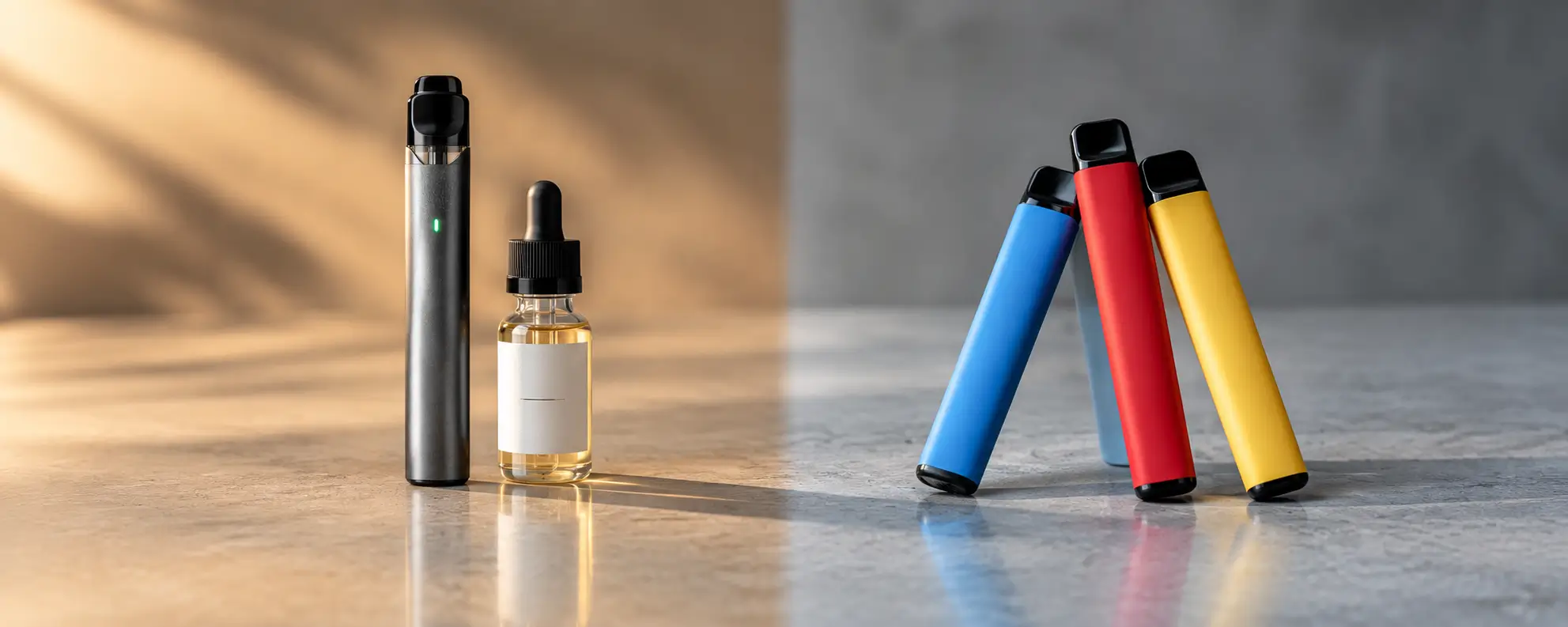
Going to a hospital can bring long waits, stress, and lots of rules on the walls. If vaping is part of your routine, it makes sense to wonder what happens when you step onto hospital property.
Signs may say ‘No Smoking,’ but often don’t mention vaping, and staff may not explain the policy unless asked.
Most hospitals run strict indoor air and campus policies, and they often treat vaping the same way they treat smoking. That can affect patients, visitors, and staff in different ways, depending on where you are and what the facility allows.
Can You Vape in a Hospital? The Short Answer
No, you can’t. Most hospitals prohibit vaping in indoor areas like lobbies, hallways, waiting rooms, bathrooms, elevators, and patient units.
Hospitals set these rules to keep indoor spaces consistent and predictable for everyone using the facility. A hospital’s no-smoking policy often covers cigarettes, cigars, and e-cigarettes under one set of restrictions, even when signage uses older “smoking” language.
Why Hospitals Restrict Vaping
Hospitals restrict vaping mainly because of policy and the environment, not because of personal preference. Hospitals manage shared indoor spaces all day, and they set rules that help staff maintain the same standard across units.
Common reasons hospitals list or imply in their policies include:
Indoor air standards: Facilities aim to keep indoor spaces stable and free from avoidable aerosols and odors.
Patient comfort: Hospitals serve people with different sensitivities, and strong smells can create complaints or conflicts.
Facility-wide rules: Staff need one consistent approach, so many places fold vaping into existing smoking restrictions.
Operational needs: Cleaning schedules, room turnover, and air circulation plans work better when staff don’t have to investigate each reported smell.
Basic context from facts about vaping can help explain the terms you see in posted notices and hospital vape policy documents.
Hospital Vaping Policies Explained
Hospital policies are usually split into two parts: what happens inside buildings and what happens on the property outside. That structure matters because some hospitals ban vaping everywhere on campus, while others only enforce rules indoors and near entrances.
Here’s how hospitals often set it up:
Indoor spaces: Many facilities treat indoor vaping as a direct policy violation.
Outdoor spaces: Some hospitals allow vaping only in designated locations, while others ban it across the entire campus.
Department-specific rules: Emergency departments, behavioral health units, maternity floors, and pediatric areas sometimes apply tighter controls, even compared to the rest of the property.
Contract and workplace rules: Staff may face stricter enforcement than visitors due to employment policies.
This is the practical takeaway: vaping in healthcare facilities tends to follow the same structure as smoking rules, but the details can change by location and hospital system.
Can You Bring a Vape to a Hospital?
Many people wonder, “Can you bring a vape into a hospital?” The answer is often yes if not used indoors. In addition, most hospitals don’t check every visitor; simply carrying a device is not the same as using it. Hospitals can still limit what you bring into certain departments, and security may step in if a policy concern comes up.
If you bring a vape device, common expectations look like this:
Keep the device stored in a pocket, purse, backpack, or closed bag.
Don’t charge it in public areas unless staff tell you a charging station is allowed.
Avoid leaving devices on chairs, windowsills, or bathroom counters, since staff may treat unattended items as a security issue.
Follow unit rules that restrict personal items, especially in behavioral health areas.
Smell can also matter. Strong scents can lead to complaints, even if you never use the device. In policy wording, “odor” often refers to the kind of lingering scent linked to vape flavor.
Where Vaping May Be Allowed on Hospital Property
Even when a hospital bans vaping indoors, the property rules can vary. Some campuses provide a designated outdoor location, while others ban vaping across all outdoor areas, sidewalks, parking lots, and courtyards.
When vaping is allowed somewhere on the property, it often comes with hospital campus vaping rules like:
Distance-from-entrance rules: Many places require a set distance from doors, vents, and open windows.
Designated areas: Some campuses point people to a specific area near the edge of the property.
No vaping near patient drop-off zones: Entrances, ambulance bays, and emergency walkways often get special restrictions.
Time and crowd considerations: If an outdoor area gets busy, staff may redirect people to reduce congestion.
If the campus bans vaping completely, staff will usually direct you off-property, such as to a public sidewalk beyond hospital grounds. This is why hospital vaping restrictions in hospitals can feel stricter than city rules you might see elsewhere.
Rules for Patients, Visitors, and Staff
Hospitals don’t apply rules the same way to everyone, even when the policy text looks similar. The difference usually comes from supervision level, safety planning, and workplace requirements.
Patients
Patients often face the most limits, especially during a stay. Rules can depend on the unit and your care plan. Some units also collect personal items at admission. Typically, the question “can you vape in a hospital room” comes up during a stay, and most hospitals treat it as a policy violation, so staff usually respond quickly.
For longer stays, ask the nurse station what your unit allows and where breaks can happen. Some campuses only allow outdoor breaks at scheduled times.
Visitors
Visitors usually need to follow posted signage and staff directions. If someone asks, “can you bring a vape in a hospital,” visitors can often carry it inside, but staff may ask for it to stay in a bag if it becomes visible or causes concern.
Additionally, visitors need to respect restricted areas like ICU waiting zones, pediatric areas, and behavioral health floors.
Staff
Staff follow workplace policies, which can be stricter than what visitors face. Some hospitals allow staff to leave campus on breaks, while others enforce a full campus ban.
Enforcement can also affect job status, so staff often have fewer options than a visitor who can simply leave the property.
If staff notice a younger visitor with a device, age rules can become part of the conversation, which is why understanding the legal age for vaping matters in some settings.
Hospital Rules vs State and Local Laws
Hospitals can set rules that go beyond what a state or city allows. Even if local law permits vaping in certain outdoor areas, a hospital can still enforce a campus-wide ban because it controls the property and sets facility terms.
A useful way to think about it:
The law sets the minimum standard for public behavior.
Hospital policy can add stricter limits for anyone on hospital grounds.
That’s why someone might follow city rules and still get redirected by security on a hospital campus. If you’re tracking location-based rules for future reference, Nevada vape law may help once it’s live, but hospitals in any state can still apply tighter policies on their own property.
What Happens When You Vape in a Hospital
Most of the time, hospitals respond in steps. Staff usually start with a warning and then get more serious if the behavior does not stop or happens in a sensitive area.
Some common results are:
The staff asks you to stop and put the device away.
Depending on the hospital’s vape policy, staff will tell you to go outside or off the property.
If staff get a lot of reports or if the situation causes problems, security may come over.
If you break the rules too many times, you may be asked to leave the premises. In some cases, you may not be able to go to certain areas of the hospital.
Staff may document policy violations for patients, especially when they happen in a room or bathroom.
How Hospitals Detect Vaping Indoors
Hospitals don’t rely only on people reporting what they saw. Many facilities monitor indoor areas to prevent vaping and smoking, especially in places where visitors try to mask vaping.
Hospitals may detect vaping through:
Aerosol and vape detectors: Some facilities install detectors in bathrooms, hallways, stairwells, and patient areas. These devices can sense particles associated with vaping and smoking and alert staff or security.
Staff rounds and routine checks: Nurses, techs, and environmental services move through units often, so visible vapor or odor can get noticed quickly.
Cameras in public corridors: Cameras typically cover hallways and entrances, which can help staff respond to reports, even though bathrooms and patient rooms usually have privacy protections.
Ventilation patterns: If vapor or odor spreads into a hall, staff may trace it back to a room or nearby bathroom.
Many detection systems send quiet alerts rather than loud alarms, which helps staff respond without disrupting patients.
Behavioral health units usually operate under stricter facility rules. These areas often use tighter monitoring and quicker enforcement because staff run a more controlled environment.
Conclusion
Hospitals usually prohibit vaping inside buildings, and many extend restrictions across the whole campus. Carrying a device inside often doesn’t break the rules by itself, but using it indoors can lead to staff warnings, security involvement, or being asked to move or leave.
The quickest way to avoid issues is to follow posted signs and ask staff where the policy allows breaks, especially if your question is “can you vape in a mental hospital” and you expect to be at the hospital for several hours.
Frequently Asked Questions
Can You Vape in a Hospital Building?
Most hospitals prohibit vaping inside hospital buildings, including waiting rooms, hallways, bathrooms, and patient units. Staff usually treat vaping as part of the facility’s no-smoking rules.
Can You Bring a Vape Into a Hospital Without Using It?
In many cases, yes, since carrying a device often doesn’t violate policy on its own. Keep it stored in a bag or pocket, and follow any department-specific limits.
Are Hospital Vaping Rules the Same Everywhere?
No, policies vary by hospital system and by campus. One facility may allow vaping in a designated outdoor spot, while another bans it across the entire property.
Do Hospitals Treat Smoking and Vaping Equally?
Many times they do. Due to the need for consistency in policy and the need to enforce the policies, many hospitals treat smoking and vaping equally when it comes to indoor or on-campus restrictions.
Can You Vape Outside on Hospital Property?
This will depend on the hospital policy. The hospital may create a buffer area around the entrance(s) where individuals cannot be closer than X feet to the building and restrict which outdoor spaces are allowed by smoking.
Subscribe now to keep reading and get access to the full archive.
"*" indicates required fields
Table of Contents
About the Author
Shelby Bockman
Shelby is a vape industry professional with more than seven years of experience in the vaping community and currently serves as a manager at Pink Spot Vapors, a well-known Las Vegas vape shop. With extensive knowledge of vaping devices, premium e-liquid, nicotine strengths, and flavor profiles, Shelby helps customers find the perfect vape setup to match their preferences and lifestyle.
Her expertise includes guiding both beginners and experienced vapers through the wide range of vape devices, helping them understand nicotine levels, and introducing them to unique e-liquid flavor profiles. Shelby is passionate about helping customers discover high-quality vape products while promoting responsible vaping and a personalized customer experience.
At Pink Spot Vapors in Las Vegas, Shelby also creates content that highlights the craftsmanship behind premium e-liquid, innovative flavor blends, and the creativity within the vape community. Her hands-on experience and passion for vaping help customers explore new flavors, find the right devices, and enjoy a better vape experience.
About the Author
Shelby Bockman
Shelby is a vape industry professional with more than seven years of experience in the vaping community and currently serves as a manager at Pink Spot Vapors, a well-known Las Vegas vape shop. With extensive knowledge of vaping devices, premium e-liquid, nicotine strengths, and flavor profiles, Shelby helps customers find the perfect vape setup to match their preferences and lifestyle.
Her expertise includes guiding both beginners and experienced vapers through the wide range of vape devices, helping them understand nicotine levels, and introducing them to unique e-liquid flavor profiles. Shelby is passionate about helping customers discover high-quality vape products while promoting responsible vaping and a personalized customer experience.
At Pink Spot Vapors in Las Vegas, Shelby also creates content that highlights the craftsmanship behind premium e-liquid, innovative flavor blends, and the creativity within the vape community. Her hands-on experience and passion for vaping help customers explore new flavors, find the right devices, and enjoy a better vape experience.