Indoor vaping can change the air in a room in seconds. Vapor drifts with airflow, mixes with humidity, and leaves particles and gases behind for a short time.
That’s why more buildings now use vape detectors. These devices monitor air conditions and send alerts when readings match a vaping-style aerosol event. People want clear, neutral facts about what these detectors can and cannot do.
How Do Vape Detectors Work? A Simple Overview
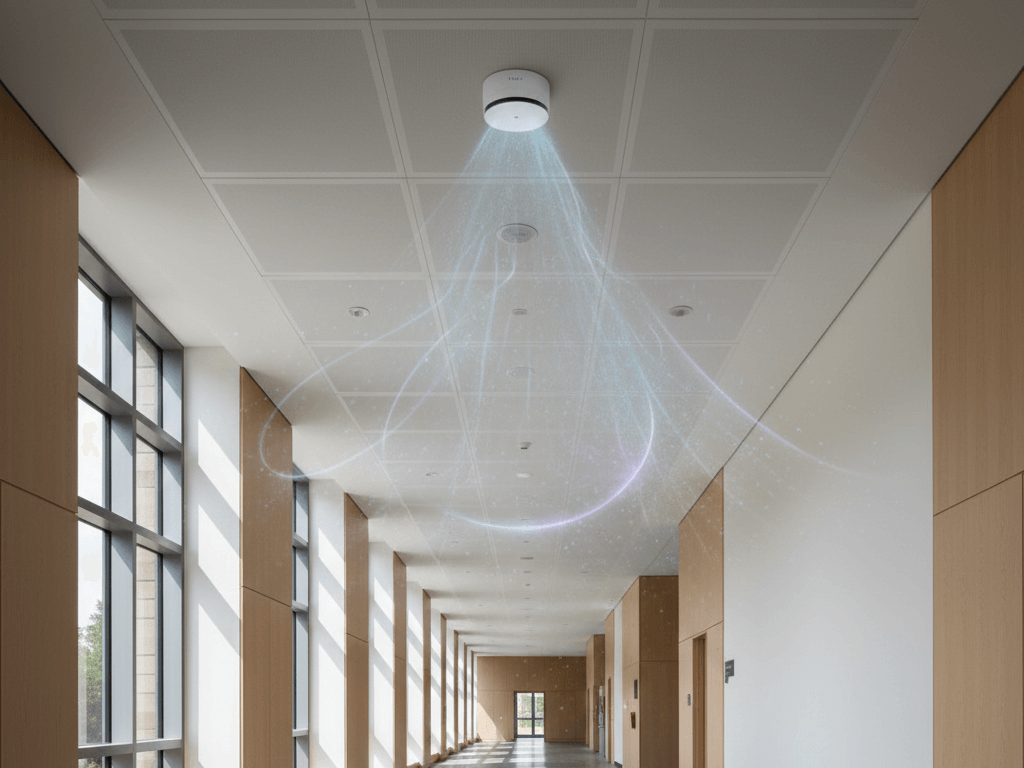
Vape detectors use air monitoring, not fire detection. A unit samples the air repeatedly, compares readings to a baseline, and checks those readings against an alert threshold.
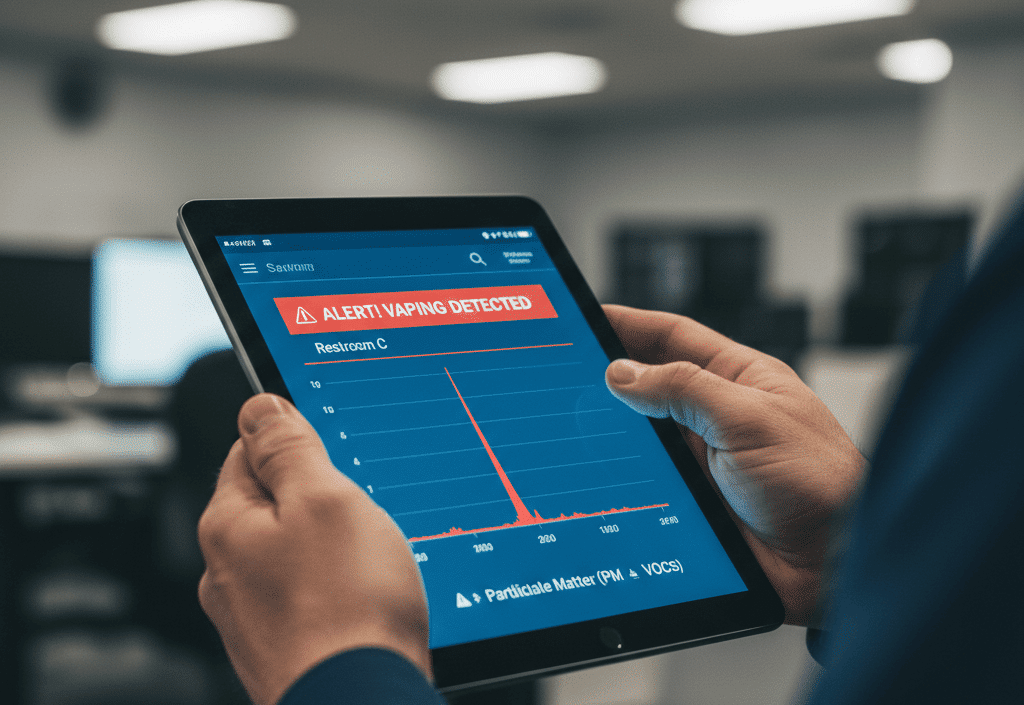
When the pattern crosses the threshold for long enough, the system notifies staff through a dashboard, message, or security workflow.
Smoke detectors look for combustion-related signals. Vape detectors focus on aerosol and air-quality patterns linked to vaping, so they don’t respond the same way. The device doesn’t need to spot a person or a device; it reacts to measurable changes in the air.
So, how do vape detectors work? They treat indoor air like data, then send an alert when the data matches preset rules.
What Do Vape Detectors Detect?
Vape detectors look for aerosols and related air-quality changes that vaping can create. The system responds to signals in the air, not to a product label.
To answer the question “what do vape detectors detect?”, most units measure particles, certain gas patterns, or both.
Vapor Aerosols Released Into the Air
Vaping produces aerosol droplets that register as airborne particles. Vapor sensors that track particulate levels can detect spikes, especially in small spaces like restrooms.
Chemical Signatures Commonly Found in Vape Vapor
Some devices have sensors using gases or chemicals that respond to volatile organic compounds (VOCs), which are often produced from vaping. There are other models with air quality sensors that measure changes in VOC levels in the room.
The sensor responds to patterns rather than names of individual devices or flavors.
Changes in Air Quality Patterns
Many systems watch how readings change over time. A short spike, a sustained increase, or a multi-sensor match can each trigger alert logic. Even when vapor looks light, facts about vaping still describe aerosols that can linger briefly in indoor air.
How Does a Vape Detector Work?
Clarifying the question of “How does a vape detector work?“, most units run a loop: sample, analyze, compare, and alert, because a unit samples the air repeatedly and checks those readings against an alert threshold.
Step-by-Step Overview of Detection Process
A typical workflow looks like this:
Set a baseline for the space
Sample air on a repeating schedule
Compare readings to thresholds and pattern rules
Send an alert when the pattern persists
How Sensors Sample Air Continuously
Sensors measure particles, gases, or optical signals tied to airborne particles. The detector stores recent readings so it can compare “now” to “just before” and spot rapid changes.
How Alerts are Triggered When Thresholds are Reached
The system triggers an alert when readings cross the threshold for a set duration. Some installations require multiple signals at once, like a particle spike plus a related gas pattern. Facilities choose how alerts arrive, such as a dashboard notification or a security panel signal.
Difference Between Detection and Identification
Detection answers: “This area shows an air pattern linked to vaping.” Most systems don’t identify individuals, and they don’t track users.
Types of Vape Detector Sensors & How They Differ
Sensor choice shapes how the unit behaves in real spaces. Some models rely on one method, while others combine signals for more consistent results across changing conditions. Vape detection technology often overlaps with tools used for indoor vape detection.
Particulate (Aerosol) Sensors
Particulate sensors estimate particle concentration. Vaping can raise those readings quickly, but sprays and some mists can also raise them, which makes placement and filtering important.
Chemical or Gas Sensors
Chemical sensors react to certain gases or volatile compounds. They can help when particles disperse quickly, but other indoor sources can also shift gas readings, so calibration matters.
Optical or Laser-Based Sensors
Optical systems use light interaction to infer particle presence and sometimes particle size. Steam and rapid humidity swings can complicate readings in some rooms.
Multi-Sensor Systems
Multi-sensor units combine sensor types and look for matches across signals. For example, the system can require both a particle pattern and a gas pattern before it alerts.
Vape Detectors vs Smoke Detectors
Individuals compare smoke vs vape detectors because both devices sit in similar locations. Their purpose differs, so their sensing logic differs too.
A smoke detector’s primary function is to detect fire-related events. A vape detector’s primary function is to detect aerosol generated by vape products and other aerosol-generating products.
There may be times when steam, fog, or excessive spray could create an overlap, which would result in false alarms. Many manufacturers have developed additional features such as humidity checks, time windows, or multiple sensor requirements to help minimize nuisance alarms.
How Well Do Vape Detectors Work?
Typically, the question “How well do vape detectors work?” needs context, because many detectors can flag vaping-style aerosol events in enclosed areas, but performance varies by environment and setup.
Two terms help set expectations:
Sensitivity: how readily the device reacts to a smaller event.
Reliability: how often alerts match vaping events instead of other aerosols.
Higher sensitivity can catch smaller events, while it can also increase nuisance alerts in spaces with steam or sprays. Threshold tuning and sensor choice change that balance.
What Affects Vape Detector Accuracy
Accuracy depends on space design, airflow, and maintenance. Facilities that want consistent alerts treat installation and upkeep as part of the system.
Room Size and Ceiling Height
Large rooms dilute aerosol faster. High ceilings spread aerosol through more air, which can lower the concentration near a sensor compared to a small restroom.
Ventilation and Airflow
Airflow can carry vapor toward a sensor or away from it. Open doors, fans, and HVAC patterns all change the path aerosol takes.
Humidity and Steam
Steam and high humidity can create aerosol-like readings. Some units measure humidity to interpret events, but rapid shifts can still trigger alerts near showers or humidifiers.
Placement and Sensor Calibration
Placement and sensor calibration greatly affect the type of air reaching the sensor, as well as how well your sensor is calibrated. The reason for this is that sensors are subject to drift over time. Therefore, regular calibrations (or at least checking) will help you maintain a relationship between your sensor’s threshold and true environmental conditions.
Type of Vape Device and Vapor Output
There are several types of devices available today that produce varying amounts of vapor/aerosols. In a well-ventilated area, lower output events may not trigger a threshold reading on a particle counter, whereas high output events can increase particulate readings very rapidly.
Where Do Vape Detectors Typically Get Installed?
Detectors are installed at places that have been shown to be likely locations of indoor vaping by the number of complaints from people and/or actions taken under an institution’s vaping policy.
Most teams place detectors in places with poor supervision such as restroom and stairwell locations.
Schools and Universities
Schools often install units in restrooms and nearby hallways. There are many local regulations that tie into the legal age for vaping. Therefore, most school districts will include a policy that outlines what the staff will do when they receive a notification of vape presence.
Hospitals and Health Care Facilities
Most hospitals and clinics have placed detectors in bathroom and corridor locations, which typically would prohibit vaping indoors.
Office and Work Environments
In most office and workplace environments, detectors are placed in bathrooms, hallways, and break rooms and send notifications directly to facilities or security personnel.
Public Buildings and Restrooms
Libraries, arenas, and transit centers typically place detectors in their bathrooms and stairwells since these are typical of areas that cannot be continuously supervised by staff.
Hotels
Hotels may place detectors in hallways and shared areas. When you vape in your hotel room, the vapor can drift into common spaces, so many properties pair these detectors with clear indoor policy language.
Airports
Airports manage many enclosed areas, including restrooms near gates. Questions about vape in an airport come up often because rules can change by area and location.
Integrations & Modern Features of Vape Detection Systems
Modern deployments connect detectors to alert and reporting tools so teams can respond with context. Many installations treat the detector as part of broader vape alarm systems.
Remote Alerts and Dashboards
Dashboards can log time, location, and event intensity. Teams can review repeat locations and adjust thresholds based on patterns in the logs.
Integration With Building Security Systems
Some facilities connect detectors to security panels or monitoring tools so alerts route to the right team and create a record of events.
Compatibility With HVAC or Facility Management Tools
Some setups connect detector data to facility workflows. Staff can compare alerts with airflow changes or maintenance work to support placement reviews and threshold tuning.
Cloud-Based Monitoring and Reporting
Cloud monitoring can store logs across multiple buildings and generate reports for internal review and planning.
Privacy and Policy Considerations
Most systems focus on air signals, not personal identity. The detector measures particles and chemical patterns in a zone and then sends an alert tied to time and location.
Many organizations avoid cameras and audio recording in these deployments, especially in sensitive spaces.
Policies vary by facility, and some mention product characteristics. They may include vape flavor, because scent complaints can accompany aerosol events even when rules focus on indoor air.
What Vape Detectors Don’t Detect
Vape detectors have limits. An alert points to an air event in an area, not to a specific person.
Why Detectors Don’t Identify Who Vaped
Air monitoring alone can’t assign an action to an individual. The detector reports a location and time window, and staff handle follow-up through local policy and observation.
Why Low-Output Vapor Does Not Always Trigger an Alarm
If there is not sufficient change in the reading, the reading will not exceed the threshold. Low aerosol output, high ventilation levels, and short durations can all result in readings remaining under the triggering threshold.
Limitations of Detection Systems
There are many common limitations:
Steam, mists, or sprays may appear similar to parts of a vape signal.
Poor placement can reduce aerosol reaching the sensor.
Sensor drift (the gradual shift of readings over time) can result in readings changing with no need for calibration/maintenance.
Crowded conditions and/or open doors can alter airflow.
Conclusion
Vapor detectors monitor air quality by detecting aerosols and changes in air quality related to vaping activity.
The sensors sample the air, compare readings against baseline values and threshold values, and generate alarms based upon readings that remain consistent with each other for a prolonged period of time.
An alert signals a location and time window. It doesn’t identify a person, and it won’t catch every low-output event in every environment. Clear policies and routine maintenance help facilities use these systems as intended.
Subscribe now to keep reading and get access to the full archive.
"*" indicates required fields
Table of Contents
About the Author
Shelby Bockman
Shelby is a vape industry professional with more than seven years of experience in the vaping community and currently serves as a manager at Pink Spot Vapors, a well-known Las Vegas vape shop. With extensive knowledge of vaping devices, premium e-liquid, nicotine strengths, and flavor profiles, Shelby helps customers find the perfect vape setup to match their preferences and lifestyle.
Her expertise includes guiding both beginners and experienced vapers through the wide range of vape devices, helping them understand nicotine levels, and introducing them to unique e-liquid flavor profiles. Shelby is passionate about helping customers discover high-quality vape products while promoting responsible vaping and a personalized customer experience.
At Pink Spot Vapors in Las Vegas, Shelby also creates content that highlights the craftsmanship behind premium e-liquid, innovative flavor blends, and the creativity within the vape community. Her hands-on experience and passion for vaping help customers explore new flavors, find the right devices, and enjoy a better vape experience.
About the Author
Shelby Bockman
Shelby is a vape industry professional with more than seven years of experience in the vaping community and currently serves as a manager at Pink Spot Vapors, a well-known Las Vegas vape shop. With extensive knowledge of vaping devices, premium e-liquid, nicotine strengths, and flavor profiles, Shelby helps customers find the perfect vape setup to match their preferences and lifestyle.
Her expertise includes guiding both beginners and experienced vapers through the wide range of vape devices, helping them understand nicotine levels, and introducing them to unique e-liquid flavor profiles. Shelby is passionate about helping customers discover high-quality vape products while promoting responsible vaping and a personalized customer experience.
At Pink Spot Vapors in Las Vegas, Shelby also creates content that highlights the craftsmanship behind premium e-liquid, innovative flavor blends, and the creativity within the vape community. Her hands-on experience and passion for vaping help customers explore new flavors, find the right devices, and enjoy a better vape experience.