Technically yes, e-liquid contains about 4–5 calories per milliliter from its base ingredients. But because you inhale vapor rather than drink the liquid, those calories bypass your digestive system entirely and are not absorbed. For practical purposes, vaping adds zero calories to your diet.
Vaping has exploded in popularity as an alternative to smoking, and with that comes a lot of questions about what’s actually in your vape and whether it affects your body. One of the most common: do vapes have calories, and could they cause weight gain?
The short answer is that while e-liquid does contain a small number of calories on paper, virtually none of them are absorbed when you vape. Here’s why and what vaping actually does to your weight.
What’s in Vape Juice? The Ingredients That Matter
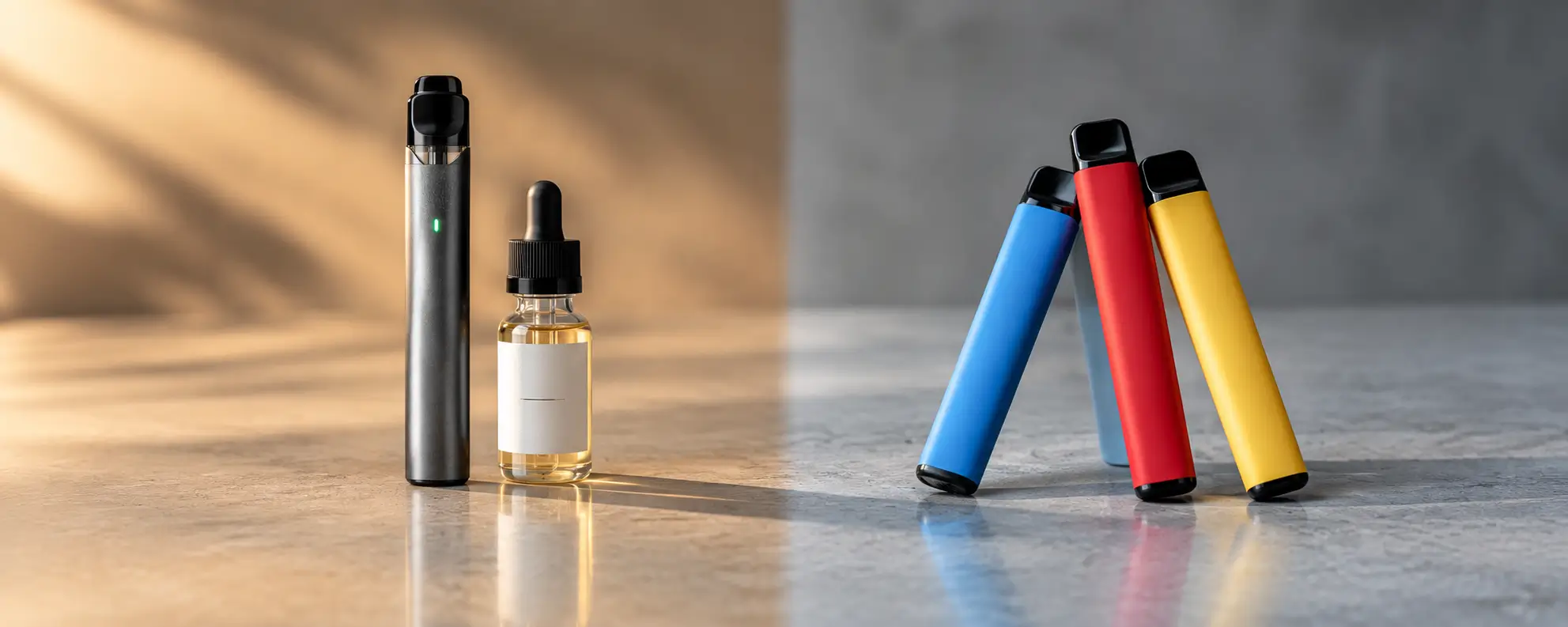
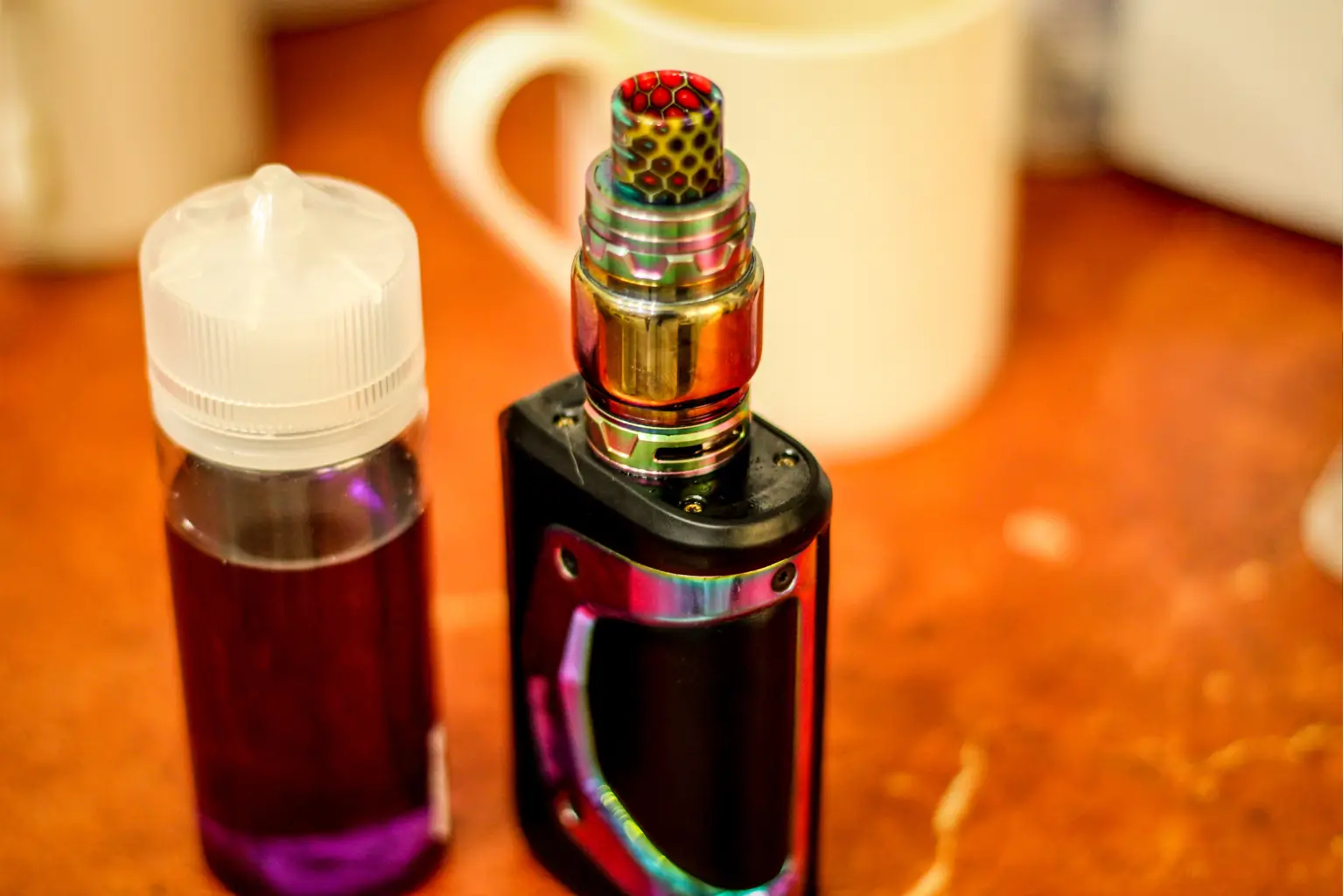
Diving into the world of vaping requires examining these popular devices more closely. Knowing their core ingredients helps you better evaluate their potential impact on daily caloric intake.
What’s Inside a Vape?
E-liquid is made from four main ingredients. Understanding each one is the fastest way to answer the calorie question:
Propylene Glycol (PG): A thin, odorless liquid that carries flavor and produces the throat hit. Contains approximately 4 calories per gram.
Vegetable Glycerin (VG): A thicker, slightly sweet liquid that creates vapor clouds. Contains approximately 4.32 calories per gram — slightly more than PG.
Nicotine: Present in varying concentrations or absent entirely in zero-nic products. Contains no meaningful calories.
Flavorings: Food-grade concentrates used in very small amounts. Minimal to zero caloric contribution. Most reputable e-liquids use sucralose or ethyl maltol as sweeteners rather than sugar.
How Many Calories Are in a Vape? (The Actual Numbers)
Using the weight of each ingredient, here’s what the math actually looks like:
Ingredient
Calories per gram
Calories per ml
Vegetable Glycerin (VG)
4.32 cal/g
~5.4 cal/ml
Propylene Glycol (PG)
4.0 cal/g
~4.14 cal/ml
Nicotine
~0
~0
Flavorings
~0
~0
A typical 50/50 PG/VG blend comes out to roughly 5 calories per milliliter of e-liquid. A standard 30ml bottle therefore contains around 150 calories, on paper. A 2ml disposable vape contains roughly 10 calories, on paper.
Why Those Calories Don’t Count: The Absorption Explanation
Calories are only meaningful to your body if they pass through your digestive system. When you eat or drink something, your stomach and intestines break it down, extract the energy, and convert it into fuel. That’s how calories affect your weight.
When you vape, the liquid is heated into a vapor and inhaled into your lungs. Your lungs are not designed to metabolize energy; they exchange oxygen and carbon dioxide, not calories. The PG, VG, and flavorings in the vapor do not enter your digestive tract, so your body has no mechanism to extract their caloric value.
A very small amount of condensed liquid can collect in the mouth and be swallowed during vaping, but the volume is so tiny that even heavy vapers would absorb well under one calorie per session from this.
Independent estimates put absorbed calories at roughly 1–5 calories per 100 puffs at most.
Can Vaping Cause Weight Gain?
No — not directly, and not from calories. As explained above, the calories in e-liquid are not absorbed through inhalation. Even if you vaped an entire 30ml bottle in a single day, the caloric contribution to your diet would be negligible.
The more relevant question for weight-conscious vapers is what nicotine does to appetite.
What about sweet flavors? Flavored vapes (fruit, dessert, and candy) do not contain real sugar or fat. The flavoring compounds that create those tastes are used in trace concentrations and contribute no meaningful calories. Vaping a strawberry cheesecake flavor is not the same as eating one.
What Happens to Your Weight When You Quit Vaping?
This is where the weight conversation gets more relevant. Quitting vaping or smoking is commonly associated with weight gain, and the cause is not the calories in e-liquid. It’s the absence of nicotine. Nicotine suppresses appetite by triggering dopamine release, which can trick the brain into feeling satisfied without food.
When you stop vaping, that appetite suppression disappears. Food tastes better, hunger cues return in full, and many people find themselves snacking more — particularly reaching for sweet or salty foods that partially replicate the oral habit of vaping.
Additionally, quitting can temporarily slow metabolism slightly as the body adjusts to lower nicotine levels.
If you’re planning to quit and are concerned about weight, the most effective approach is to anticipate the increased appetite ahead of time, have healthy snacks available, and build in more physical activity during the first few weeks.
Does Nicotine Affect Your Appetite and Metabolism?
Yes, and this is actually the more meaningful relationship between vaping and weight than calories.
Nicotine acts as a mild stimulant that can temporarily suppress appetite and slightly increase metabolic rate. It does this by triggering dopamine release, which can reduce hunger signals and create a brief feeling of satisfaction. This is why long-term smokers and vapers often report eating less without consciously trying to.
However, this effect varies significantly between individuals and is not reliable enough to be considered a weight management strategy. More importantly, nicotine is not calorie-free in the way that matters for weight — it is dependency-forming, and the appetite suppression disappears when you stop using it, often resulting in rebound hunger.
The Bottom Line
Vapes do contain calories, about 5 per milliliter on paper. But because you inhale vapor rather than drink the liquid, your digestive system never sees those calories. For all practical purposes, vaping has zero impact on your caloric intake or daily diet.
Where vaping does interact with weight is through nicotine’s effect on appetite and metabolism, and more significantly, through the appetite rebound that can happen when you quit.
FAQ
Can Vaping Cause Weight Gain?
Vaping itself doesn’t add weight. E‑liquid has almost no calories, so you don’t consume any really. However, when people stop vaping, they often regain their appetite. That change in eating habits can lead to weight gain.
Does Nicotine Cause Belly Fat?
No. Nicotine does not cause fat to be created specifically around your stomach. It can reduce appetite and can increase metabolism a little but it doesn’t specifically target fat around your belly.
How Many Calories Are in a Vape Hit?
Essentially zero. Any calories in vape juice are too small to be absorbed. Your body doesn’t treat them like food, so they don’t add up in the calorie count.
Can I Vape While Fasting?
Yes. Vaping won’t break your fast. Vapor doesn’t have enough energy or nutrients to end your fast. This means it doesn’t impact ketosis or the state of fasting.
Can You Vape While on a Diet?
You can, but don’t use vaping to manage your diet. Nicotine may lower hunger briefly, but it has health risks and can lead to dependency. Relying on it instead of healthy habits isn’t safe.
Does Nicotine Burn Calories?
Not in any way. Nicotine can boost metabolism but it’s not enough for it to be counted as “burning calories.” Any effects are too insignificant to be of any significance in terms of weight management.
Is Vaping OK on Keto?
Yes. Vaping isn’t a source of sugars, carbs, or other fats that can interfere with keto. Since e-liquids don’t typically include sugars, they do not interfere with ketosis.
Subscribe now to keep reading and get access to the full archive.
"*" indicates required fields
Table of Contents
About the Author
Shelby Bockman
Shelby is a vape industry professional with more than seven years of experience in the vaping community and currently serves as a manager at Pink Spot Vapors, a well-known Las Vegas vape shop. With extensive knowledge of vaping devices, premium e-liquid, nicotine strengths, and flavor profiles, Shelby helps customers find the perfect vape setup to match their preferences and lifestyle.
Her expertise includes guiding both beginners and experienced vapers through the wide range of vape devices, helping them understand nicotine levels, and introducing them to unique e-liquid flavor profiles. Shelby is passionate about helping customers discover high-quality vape products while promoting responsible vaping and a personalized customer experience.
At Pink Spot Vapors in Las Vegas, Shelby also creates content that highlights the craftsmanship behind premium e-liquid, innovative flavor blends, and the creativity within the vape community. Her hands-on experience and passion for vaping help customers explore new flavors, find the right devices, and enjoy a better vape experience.
About the Author
Shelby Bockman
Shelby is a vape industry professional with more than seven years of experience in the vaping community and currently serves as a manager at Pink Spot Vapors, a well-known Las Vegas vape shop. With extensive knowledge of vaping devices, premium e-liquid, nicotine strengths, and flavor profiles, Shelby helps customers find the perfect vape setup to match their preferences and lifestyle.
Her expertise includes guiding both beginners and experienced vapers through the wide range of vape devices, helping them understand nicotine levels, and introducing them to unique e-liquid flavor profiles. Shelby is passionate about helping customers discover high-quality vape products while promoting responsible vaping and a personalized customer experience.
At Pink Spot Vapors in Las Vegas, Shelby also creates content that highlights the craftsmanship behind premium e-liquid, innovative flavor blends, and the creativity within the vape community. Her hands-on experience and passion for vaping help customers explore new flavors, find the right devices, and enjoy a better vape experience.